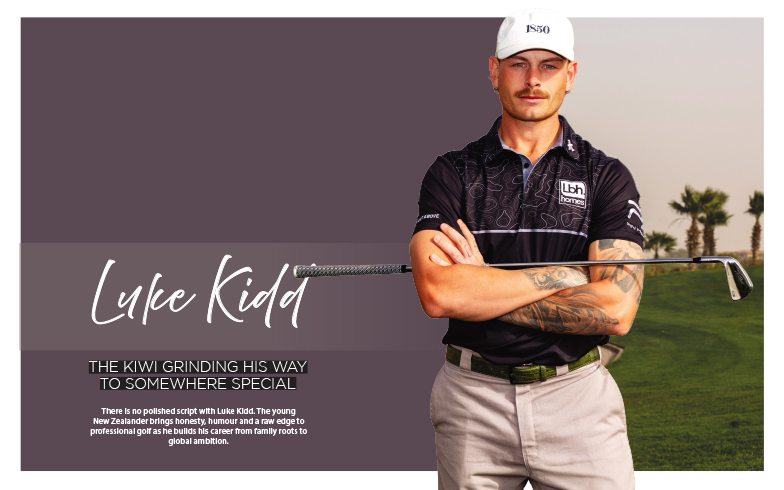
There is no polished script with Luke Kidd. The young New Zealander brings honesty, humour and a raw edge to professional golf as he builds his career from family roots to global ambition.
BORN INTO IT
Some players discover golf. Others are dropped straight into it. Luke Kidd was firmly in the second category. Growing up in New Zealand, golf was everywhere. Mum, dad, uncles, aunties and siblings all played, which meant the game was never far away.
As a kid, the choice was simple. Head to his nana’s house or head to the golf course. He chose golf, happily being pushed around in a trolley by his dad, soaking in everything the game had to offer before he even realised what it meant.
What kept him there was not just family influence, but the nature of the sport itself. Golf offered something different. No teammates, no hiding place, no excuses.
“There’s no one else to blame,” Kidd says. “If you play badly, it’s on you. If you play well, it’s on you. That’s what I love about it.”
That sense of accountability quickly became addictive. Golf was not just a sport, it was a mirror. Every mistake, every success, every moment of pressure reflected something deeper.
THE DECISION
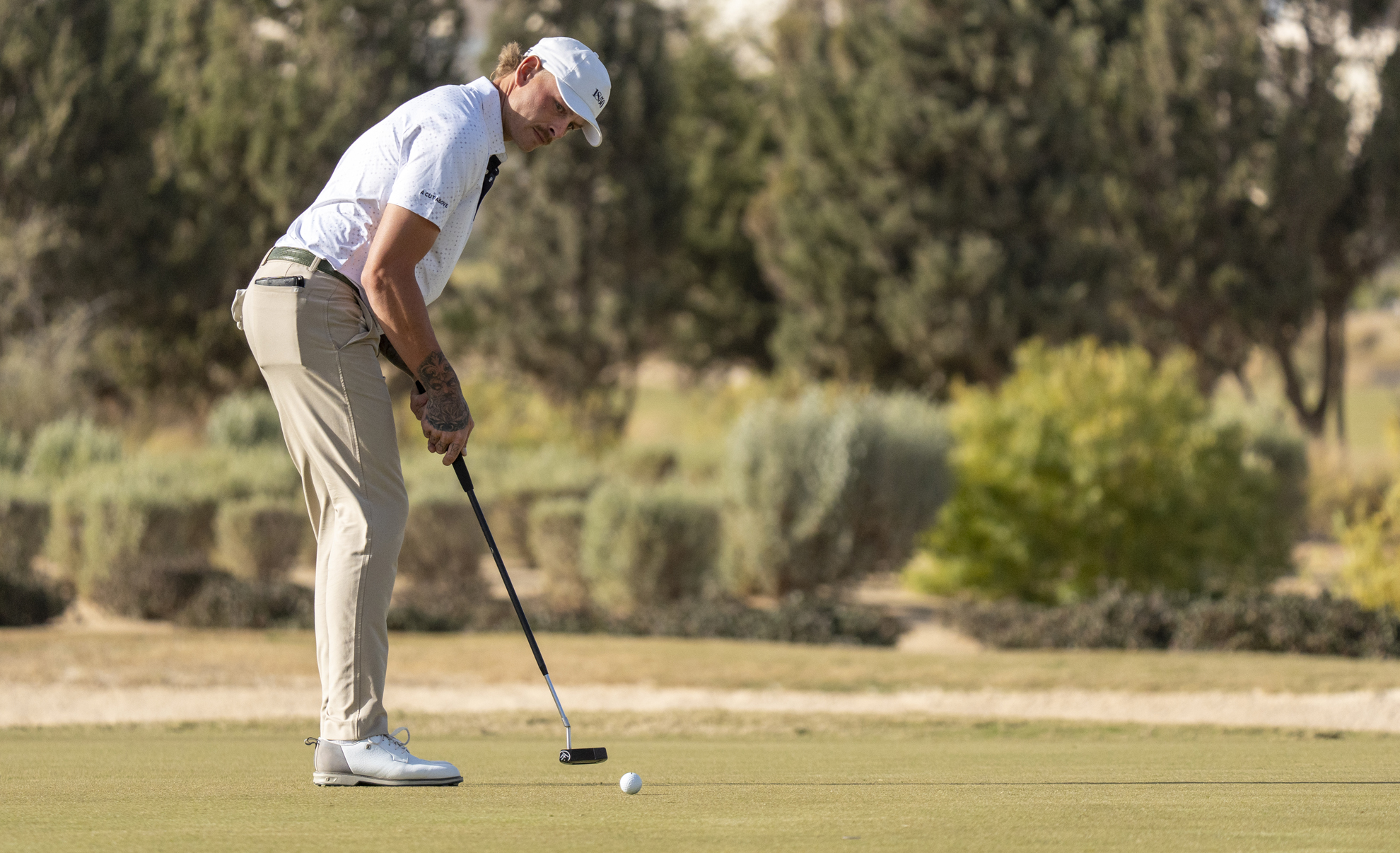
Like most young athletes in New Zealand, Kidd played everything. Rugby was a natural path. Cricket, tennis and even fighting all featured along the way. Talent was not limited to one sport.
Reality arrived at sixteen. Supporting multiple sports was no longer viable, and a decision had to be made.
“We sat down as a family and had to pick one,” he says. “We couldn’t keep doing all of them.”
Golf stood out. Not just because of ability, but because of the life it offered. Less physical risk, more opportunity to travel, and exposure to different cultures.
“The travel side really got me. Being able to see the world through golf was a big thing for me.”
Once that decision was made, there was no looking back. The commitment was total.
A DIFFERENT SPARK
For many players, the moment they fall in love with golf is tied to a single shot. A flushed iron, a holed putt, something magical.
For Kidd, it was something else entirely.
“It was going to Melbourne with my dad for my first overseas event,” he says.
That experience shifted everything. The travel, the shared experience, the sense of stepping into something bigger than local competition.
“Just being there together, having him watch me play, that felt special. Golf lets your family be part of it in a way other sports don’t.”
BELIEF BUILDS
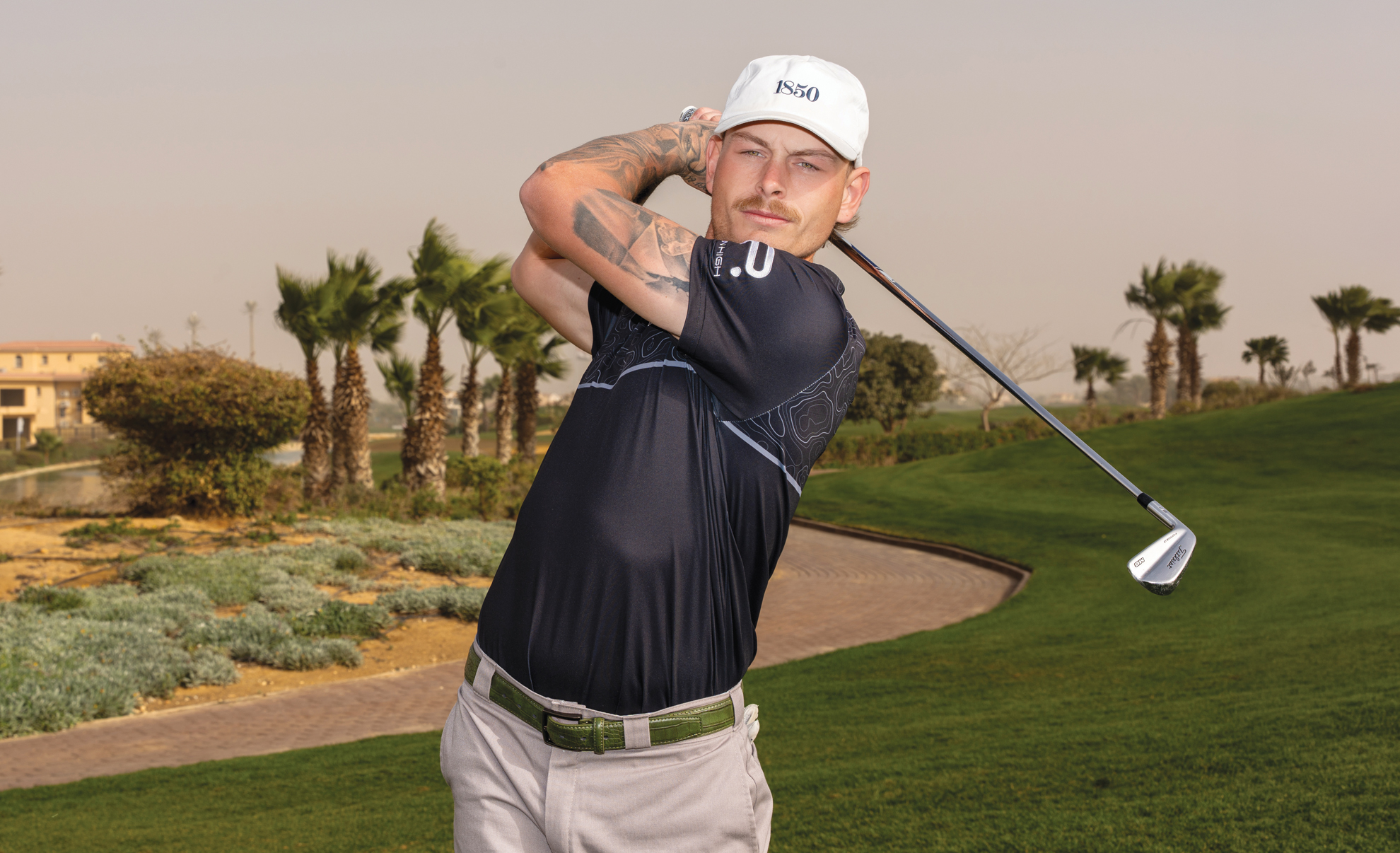
Selection for New Zealand Golf around the age of sixteen or seventeen provided the confirmation he needed.
“It gave me confidence. Probably boosted the ego a little bit as well,” he laughs.
Competing at that level, surrounded by strong players, reinforced a growing belief.
“I always felt like I could do it. That’s when I really committed to becoming a professional.”
SLIDING DOORS IN SPAIN
The move to Spain came through a moment that sounds almost too simple to be true. After a run of events on the MENA Golf Tour, Kidd needed a base closer to Europe.
Returning to New Zealand meant a brutal travel schedule, so he looked for alternatives.
Then came the message. A direct approach to Michael Campbell.
“I sent him a message on Instagram. I didn’t expect a reply.”
He got one.
“He just said, come over to Marbella.”
That single message changed everything.
LEARNING FROM CAMBO
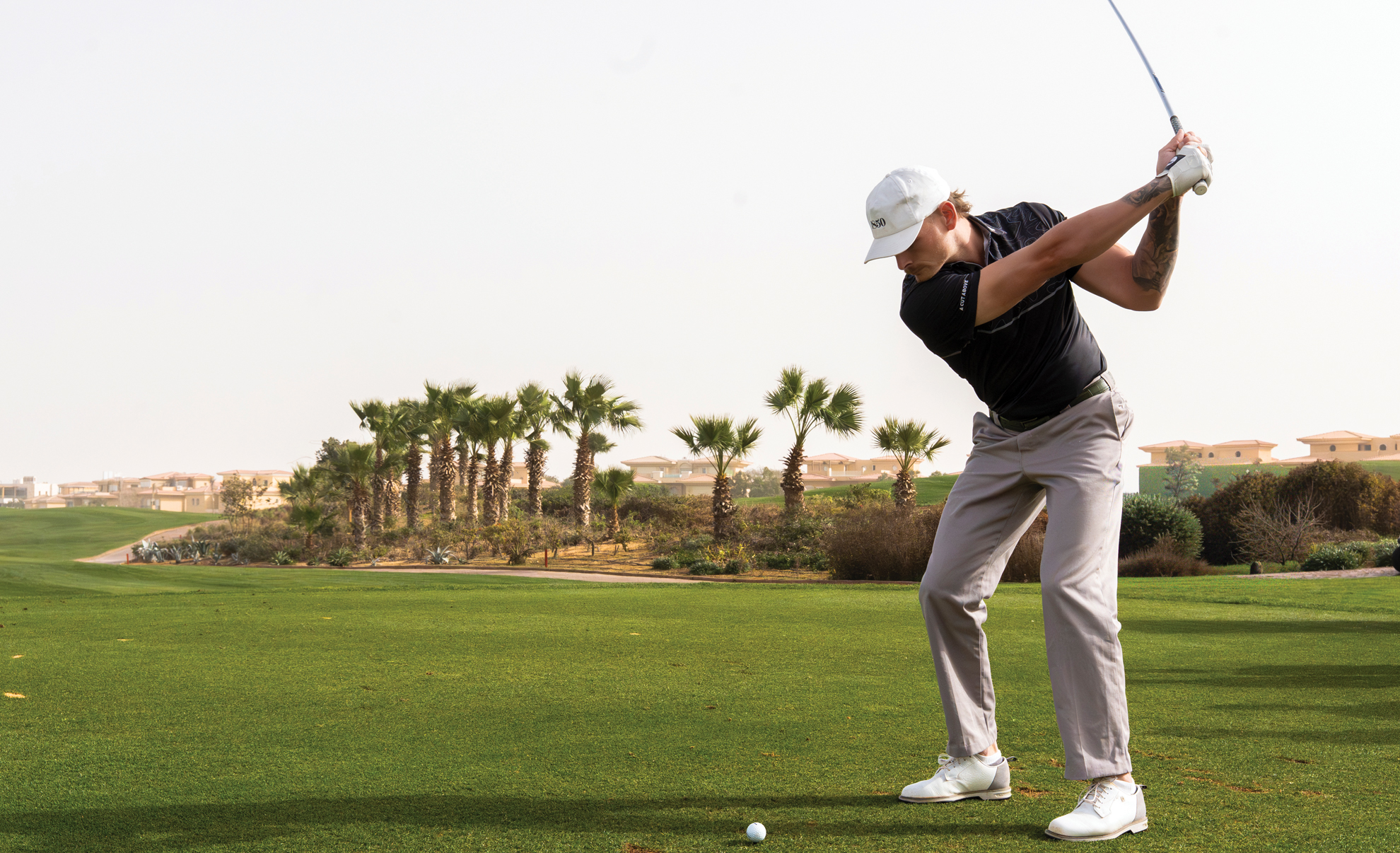
Working alongside a US Open champion offers insight few young professionals ever receive. Campbell’s influence extends far beyond swing mechanics.
“It’s all about the small things. The one percenters,” Kidd explains.
Daily routines, mental discipline and unwavering commitment form the foundation.
“Have a process and stick to it every single day. That’s the biggest thing I’ve taken from him.”
There are lighter moments too, including unique views on nutrition that reflect the depth of thinking at the highest level.
More importantly, the exposure to stories from the top of the game has been transformative.
“You realise everyone is human. That makes you believe you can do it as well.”
THE MARBELLA ROUTINE
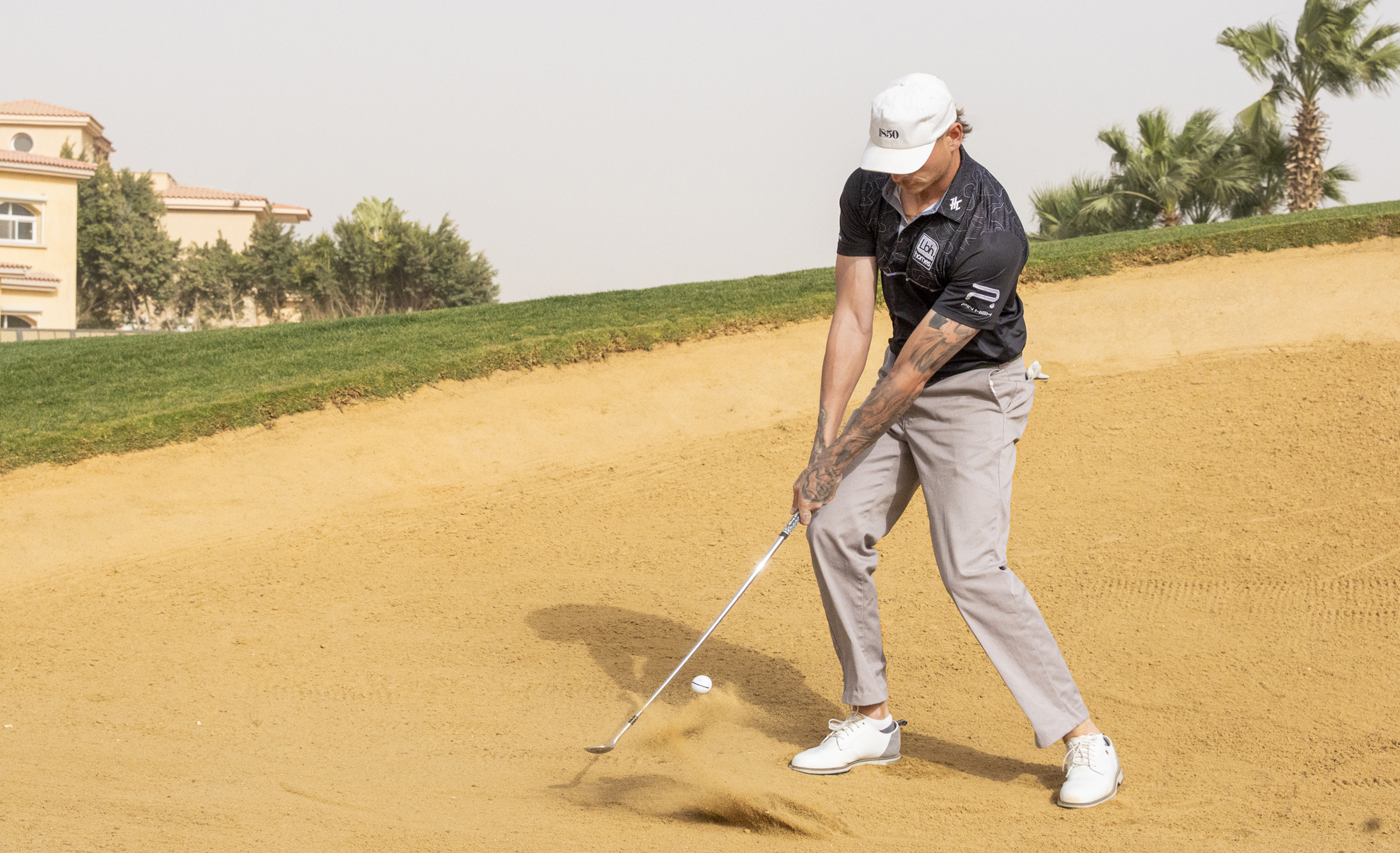
Life in Spain is structured and relentless. Early mornings start in the gym before transitioning into long practice sessions.
Hours are spent on the range, refining technique, followed by on course work in the afternoon.
“It’s pretty much six days a week. There’s not much time off.”
The environment plays a key role. Tight courses demand precision, while consistent weather allows uninterrupted development.
“It’s shaped my game in a really good way.”
THE REALITY OF PROFESSIONAL GOLF
The transition from amateur to professional golf is often misunderstood. While the standard of play increases, it is the off course demands that hit hardest.
“Everything is on you now,” Kidd says. “Travel, expenses, everything.”
Without strong financial backing, managing costs becomes a constant consideration.
Travel brings its own lessons, from navigating unfamiliar cultures to dealing with logistical issues.
“You learn quickly. You have to.”
The experience has accelerated his growth, both as a player and as a person.
LEFT HANDED CHALLENGES
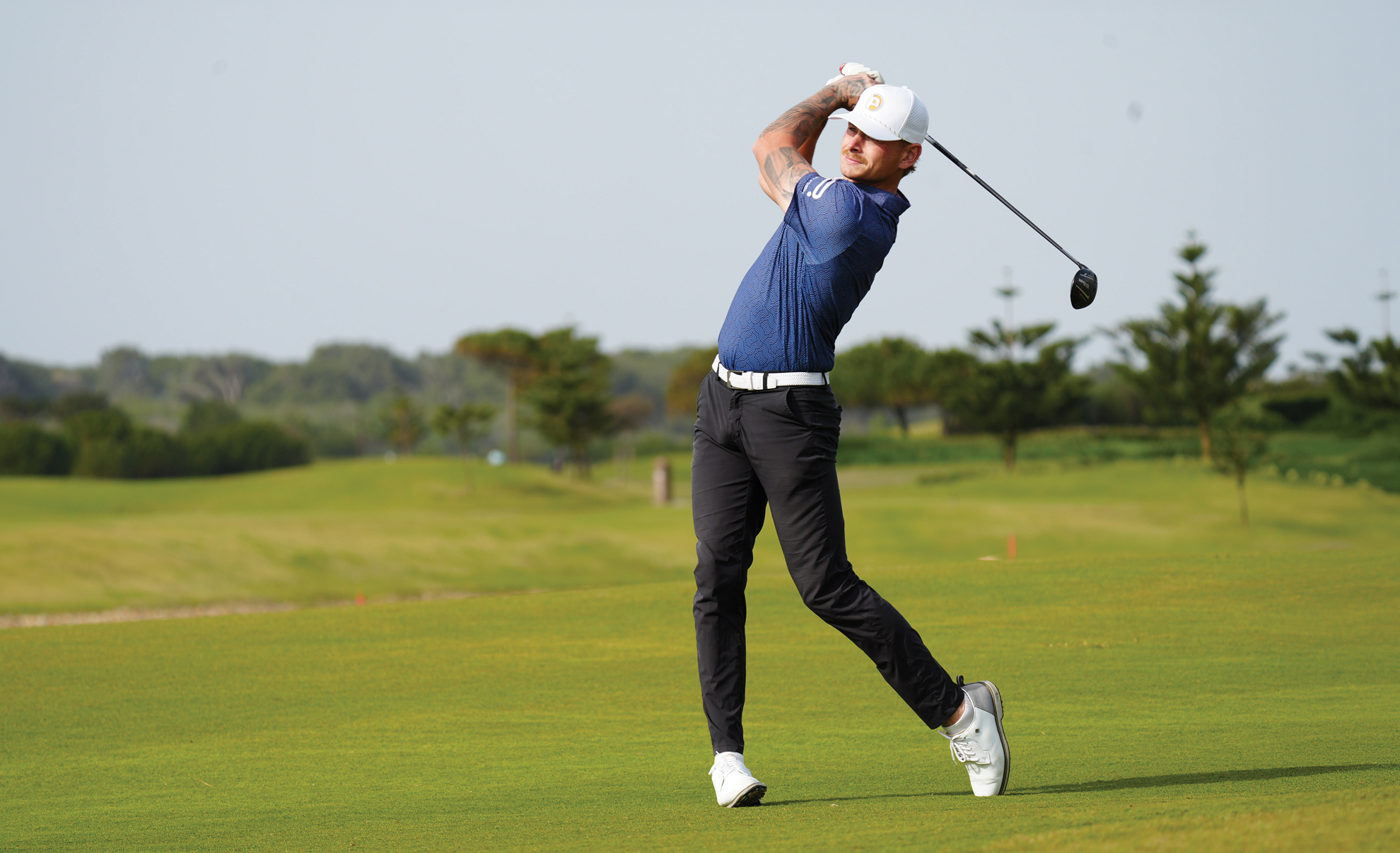
Being left handed adds another layer of complexity. Equipment options are limited, and even basic items can be difficult to source.
“My parents tried to get me to play right handed because it was cheaper,” Kidd says.
A coach intervened, recognising his natural swing.
“He told them you can’t change it.”
The decision has paid off, even if it occasionally makes life more difficult.
“I think left handed swings look better anyway,” he adds with a grin.
INJURY AND REFLECTION
Just as momentum was building, injury forced Kidd to step away from competition. Withdrawals from early season events were a major frustration.
“My game was in a really good place, so it was tough.”
Time away from the course provided an unexpected opportunity to reflect.
“When golf is everything and you can’t play, you realise you need balance.”
Focus has shifted towards recovery, smarter practice and maintaining both physical and mental health.
“You can’t just grind all day. It’s not sustainable.”
LOOKING AHEAD
Short term goals are centred around returning to full fitness and competing strongly on the Tartan Tour.
“Top five on the Order of Merit would be ideal.”
Beyond results, the emphasis remains on learning and development.
“This is my first full year as a pro. I want to understand my game and myself better.”
Long term ambitions are clear. The PGA Tour remains the ultimate destination.
Motivation, however, runs deeper than trophies or earnings.
“I want to be in a position where I can help people, especially with mental health.”
Family remains at the core of everything.
“They’ve given me everything. I want to give back.”
The vision is simple yet powerful. One day, standing on the first tee at Augusta National with his parents watching.
QUICKFIRE
Favourite course: Tara Iti. Dream course: Wolf Creek.
Dream four ball: Tupac, Michael Jordan, Theo Von and Cillian Murphy.
First purchase after a Major win: a house for his parents, possibly followed by a Rolex or a supercar.
Go to club under pressure: driver. Worst habit: forgetting to eat or drink during a round.
One constant in the bag: a New Zealand coin, a reminder of home.
Alternative career: race car driver.
THE FINAL WORD
Luke Kidd is not polished and he is not trying to be. What he offers is authenticity, work ethic and a willingness to embrace every part of the journey.
In a sport that demands resilience and patience, those qualities matter. The path ahead is long, but the foundations are firmly in place.
He understands the grind, accepts the challenges and continues to move forward. That alone makes him a player worth watching.