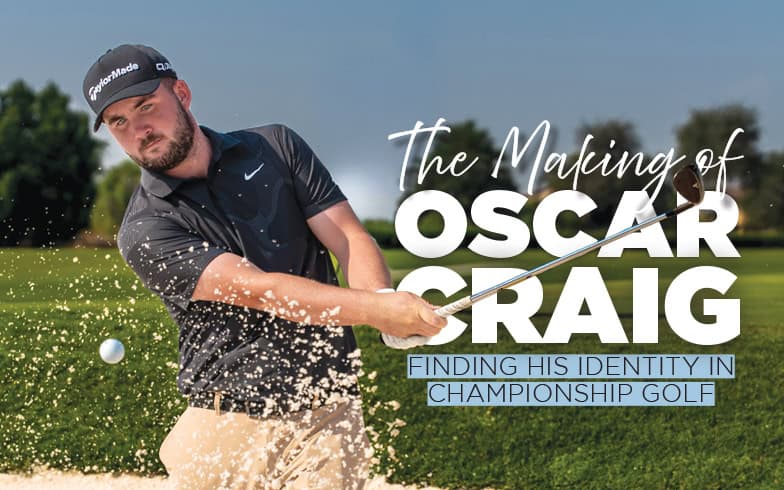
After winning the Al Ain Open, the 18-year-old opens up about life in golf’s spotlight, learning from elite mentors, and why the hardest lessons can’t be learned on the range.
There’s a moment Oscar Craig keeps coming back to, not from his recent victory at the Al Ain Open, but from a humid afternoon in 2017. He was watching his stepfather, Tommy Fleetwood, navigate the final holes of the French Open, witnessing not just the triumph but something deeper: the weight of pressure transformed into precision, the roar of a crowd validating years of unseen work.
“That was a game changer for me,” Oscar says. “Watching success, but also the build-up to it, hitting amazing shots under pressure, the support he continues to get. That’s when I realized this is what I want to do.”
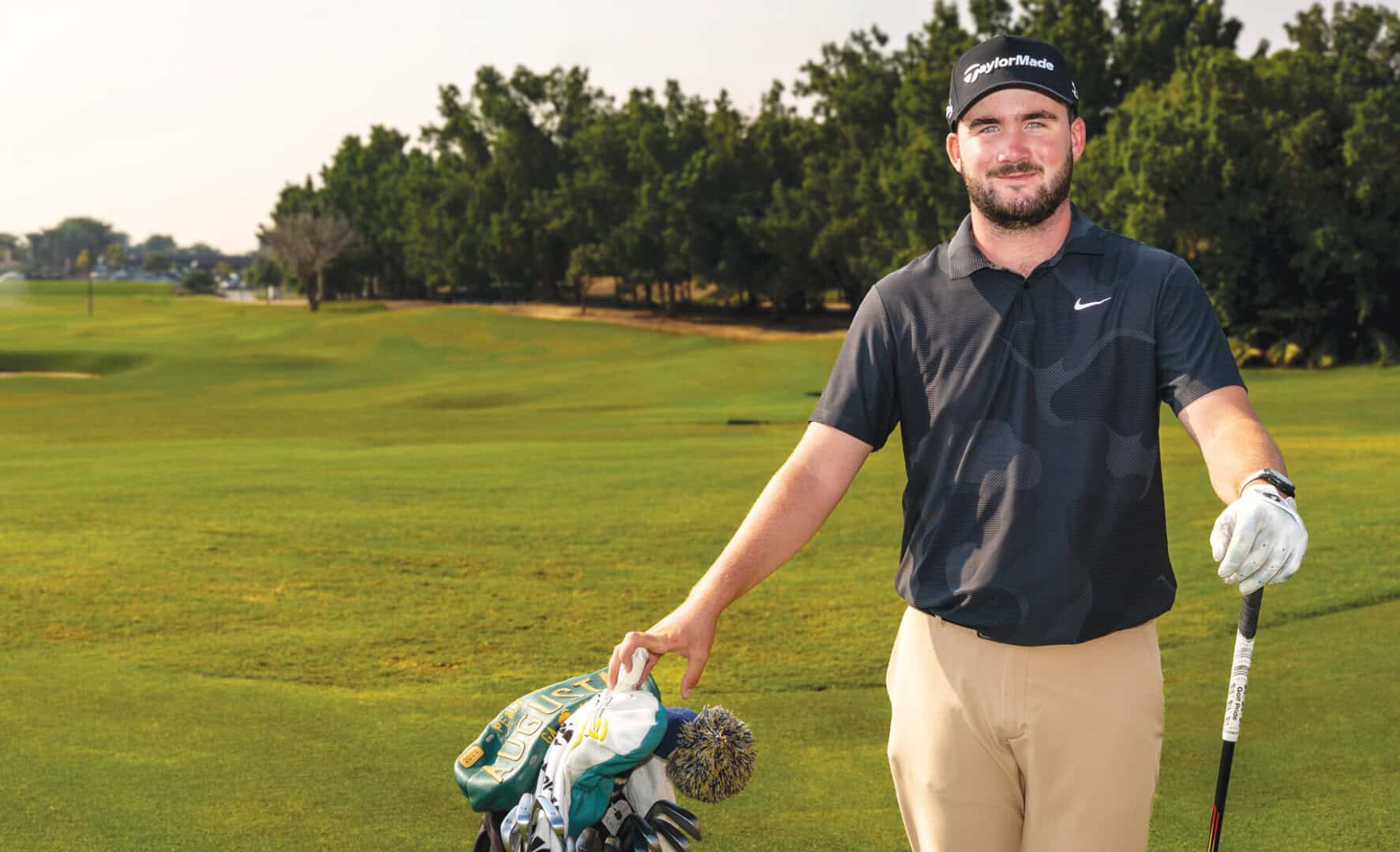
At 18, Oscar has grown up inside the machinery of elite golf, observing tour-level routines and championship mindsets from an angle most aspiring professionals never access. But rather than shrinking under that shadow, he’s learning to use it as a blueprint.
Lessons From the Inside
The practice range can teach you mechanics. It can groove a swing, dial in distances, build muscle memory. What it can’t teach you is patience, the kind that comes from watching world-class players grind through slumps and stay consistent when doubt creeps in.
“Hard work eventually pays off,” Oscar says. “Not necessarily with trophies, but with good results, getting into majors, earning a tour card. Those things are all earned from working hard at the right things, even when you don’t want to.”
It’s a lesson reinforced daily at the Tommy Fleetwood Academy at Jumeirah Golf Estates in Dubai, where he’s been a member for over three years. The UAE has become his laboratory. The conditions suit his game, the courses feel familiar, and the Emirates Golf Federation’s commitment to improving amateur events has created a proving ground where young talent can flourish.
But comfort zones only get you so far. Links golf, Oscar admits, remains his greatest challenge. “Long rough, strong winds, difficult bunkers, it’s by far the hardest type of golf,” he says. “It can bring the best and worst out of you, but that’s a positive because you learn so much quicker what you need to work on.”
The Chip That Changed Everything
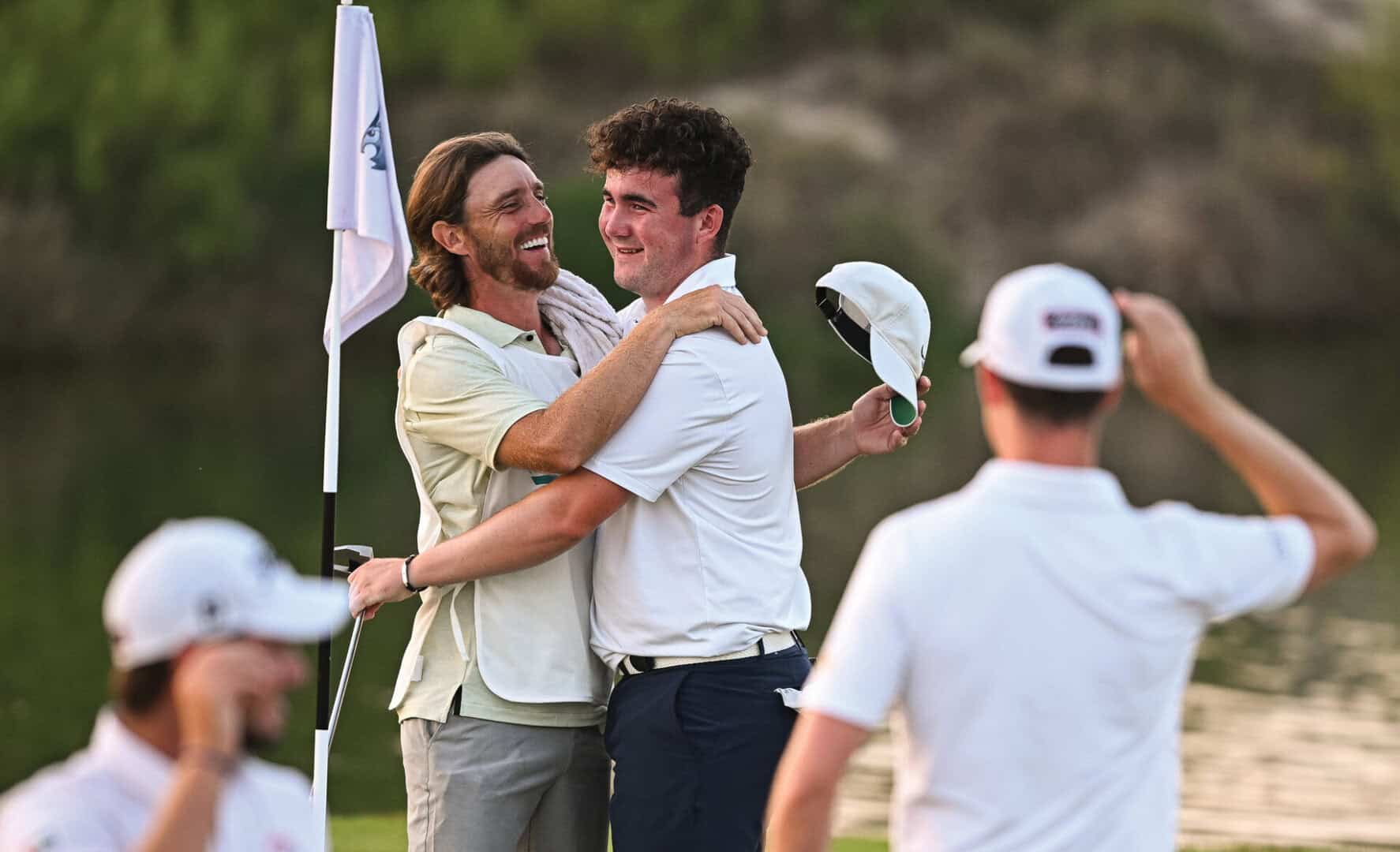
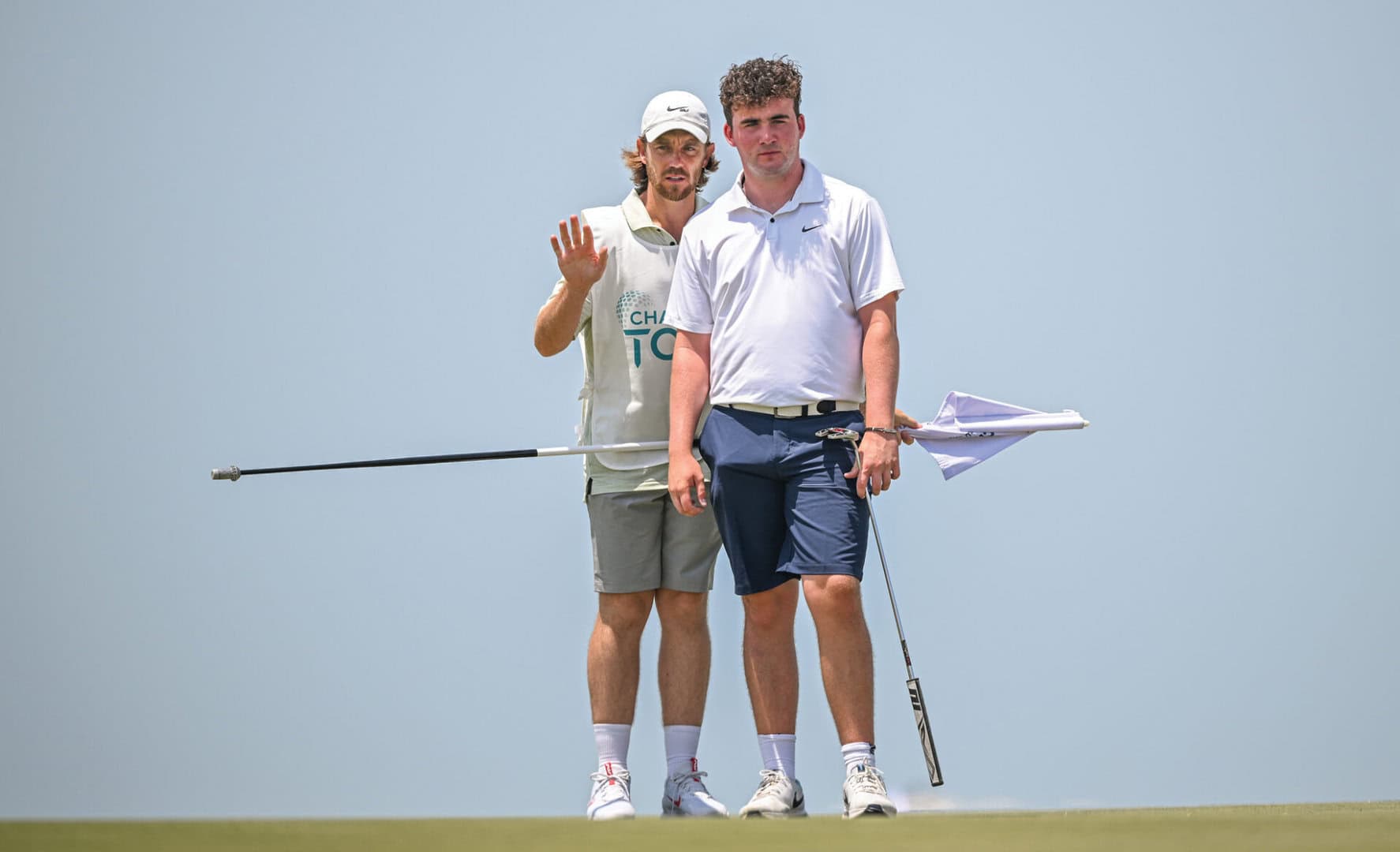
If you want to understand Oscar’s development, you need to understand one shot: a chip on the final hole of his Challenge Tour debut. Tommy was on the bag, not as stepfather, but as caddie. They walked onto the green together, finding landing zones, calculating roll.
“To hit it where I wanted to, to two feet, while trying to make a cut on my debut, that was a huge confidence boost,” Oscar recalls. “Something I’ll always be proud of.”
It wasn’t just the shot itself. It was the process leading up to it, the collaboration between mentor and student, the trust in preparation when stakes are highest. These are the quiet moments that shape careers.
Finding His Identity
Ask Oscar to define his golfing identity and he’ll give you an honest answer: he’s still figuring it out. And there’s strategy in that uncertainty.
“I believe it will take time through experiencing different scenarios on the golf course, whether good or bad,” he explains. “I’ll always try to be strategic, but I trust my instinct. If needs be, I’ll be instinctive in some scenarios.”
That balance revealed itself at the Al Ain Open. On Sunday’s back nine, facing a difficult up-and-down on the 10th hole, Oscar salvaged bogey, a moment that proved crucial to his mindset.
“Even though I made bogey, that up-and-down boosted my confidence massively,” he says. “I made sure I was as calm as possible, patient. I didn’t want to get too high or too low. I just kept taking one foot in front of the other.”
The victory marked his first win in some time, validation of the mental work that’s become the cornerstone of his improvement. “The biggest change is my mentality,” Oscar says. “I’ve become stronger and more positive. Whatever the case is, I’ll always try my best to work hard and never give up.”
The TaylorMade Edge
Equipment changes can be subtle turning points in a player’s development. For Oscar, a new partnership with TaylorMade has provided both tangible and psychological benefits.
“They’re the best clubs I’ve hit,” he says. “The new woods are absolutely incredible. They’ve helped me gain so much more confidence off the tee.”
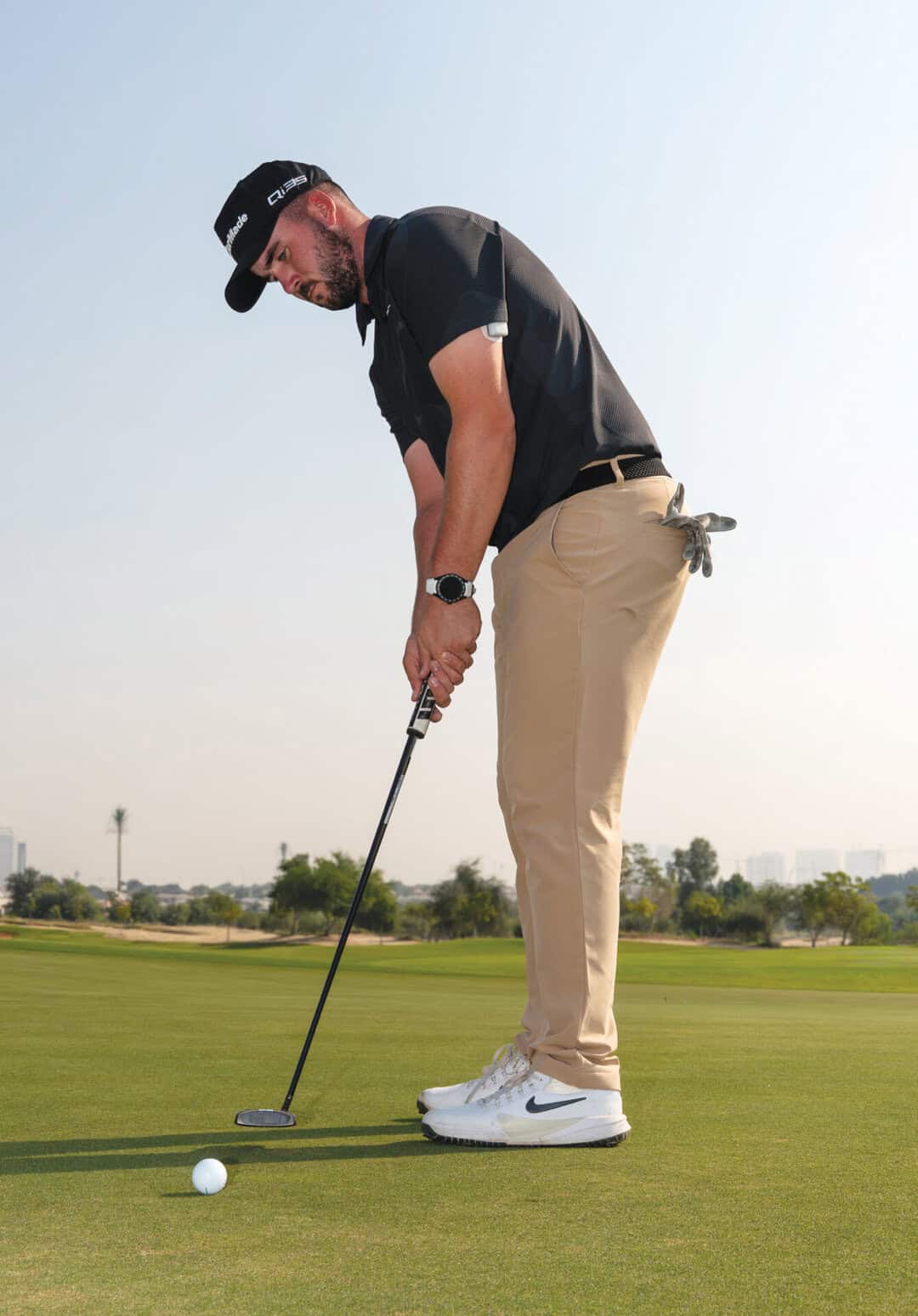
That confidence feeds into tournament preparation, which has evolved beyond technical work. Oscar now maps rounds on Upgame, identifying average approach distances and uncomfortable tee shots, building familiarity with scenarios before they arise in competition. He trains hard early in the week, then maintains flexibility through stretching, eliminating potential excuses before they can take root.
“I want to cut out reasons why I didn’t do well,” he explains.
The Weight of Expectations
Growing up adjacent to tour-level success could create impossible standards or breed complacency. Oscar seems to have absorbed something different: a realistic appreciation for the work required and humility about his current place in the journey.
When asked about pushing standards for amateur golf in the UAE, he defers. “The EGF are making events better each year,” he says. “I don’t really think there’s much I can do apart from focusing on my game and doing what I can to be successful.”
It’s not false modesty, it’s focus. With the MENA Golf Tour restarting and providing new opportunities for regional amateurs, Oscar sees his role clearly: keep developing, keep competing, let results speak.
What Comes Next
The Al Ain Open trophy is a springboard, not a destination. Oscar knows the difference. He’s seen enough championship golf to understand that one victory doesn’t define a career.
“As great as it was to win again, I still have a lot to work on,” he says. “I’ll continue to push myself every day, doing the right things in practice and tournament preparation, and hopefully bring more success in the rest of the season.”
There’s no bravado in his voice, no premature declarations about tour cards or major championships. Just steady purpose, informed by years of watching greatness up close.
With Tommy Fleetwood as a stepfather, Oscar could easily fall into the trap of imitation. But he understands what many young players miss: golf rewards authenticity, not carbon copies.
He’s simply trying to be the first Oscar Craig, and judging by the work he’s putting in, that might be exactly what golf needs to see.