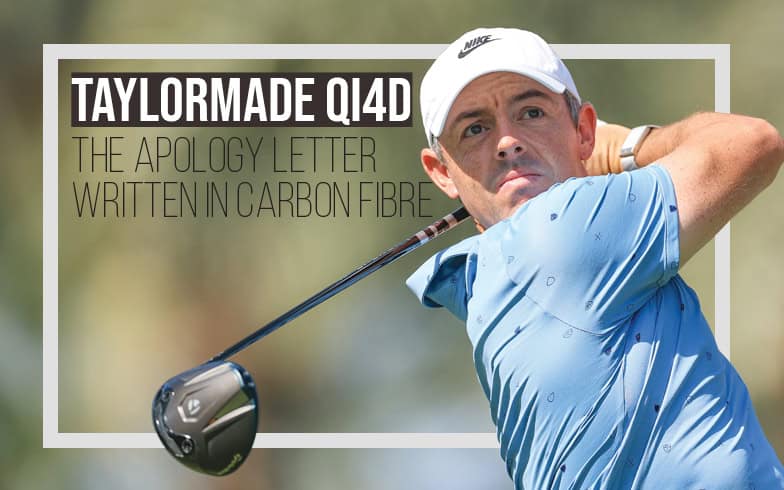
The Apology Letter Written in Carbon Fibre
Golf clubs, like cars, come with promises. Faster. Straighter. Longer. Revolutionary.
And every now and then, a manufacturer releases something that doesn’t quite deliver—at least not where it really matters.
For TaylorMade, 2025 was one of those awkward years where the marketing said “trust us” and the tour vans quietly replied “we’re good, thanks.”
Because when Rory McIlroy—a man whose driving talent borders on the supernatural—doesn’t put your new driver in play, people notice. When Scottie Scheffler, the most reliable tee-to-green machine on the planet, politely declines too, the alarm bells don’t just ring. They clang. Loudly. In Dolby Surround Sound.
So Qi4D isn’t just a new driver. It’s TaylorMade clearing its throat, straightening its tie, and saying:
“Right. Let’s have another go, shall we?”
Last Year’s Problem: It Wasn’t Bad… Which Was the Problem
Here’s the thing. The 2025 driver wasn’t awful. In fact, for most golfers, it was perfectly decent. Long enough. Forgiving enough. Looked the part. Did the job.
But elite players don’t want decent. They want obvious.
Tour pros are like Formula 1 drivers. If the new car is half a tenth slower through one corner, they’ll notice. And if it doesn’t give them a reason to switch—a clear, measurable upgrade—they’ll stick with what they know, thank you very much.
That’s what happened. The driver didn’t fail spectacularly. It simply failed to seduce.
And in golf equipment, indifference is far more damaging than outrage.
Qi4D Arrives: Less Shouting, More Knobs to Turn
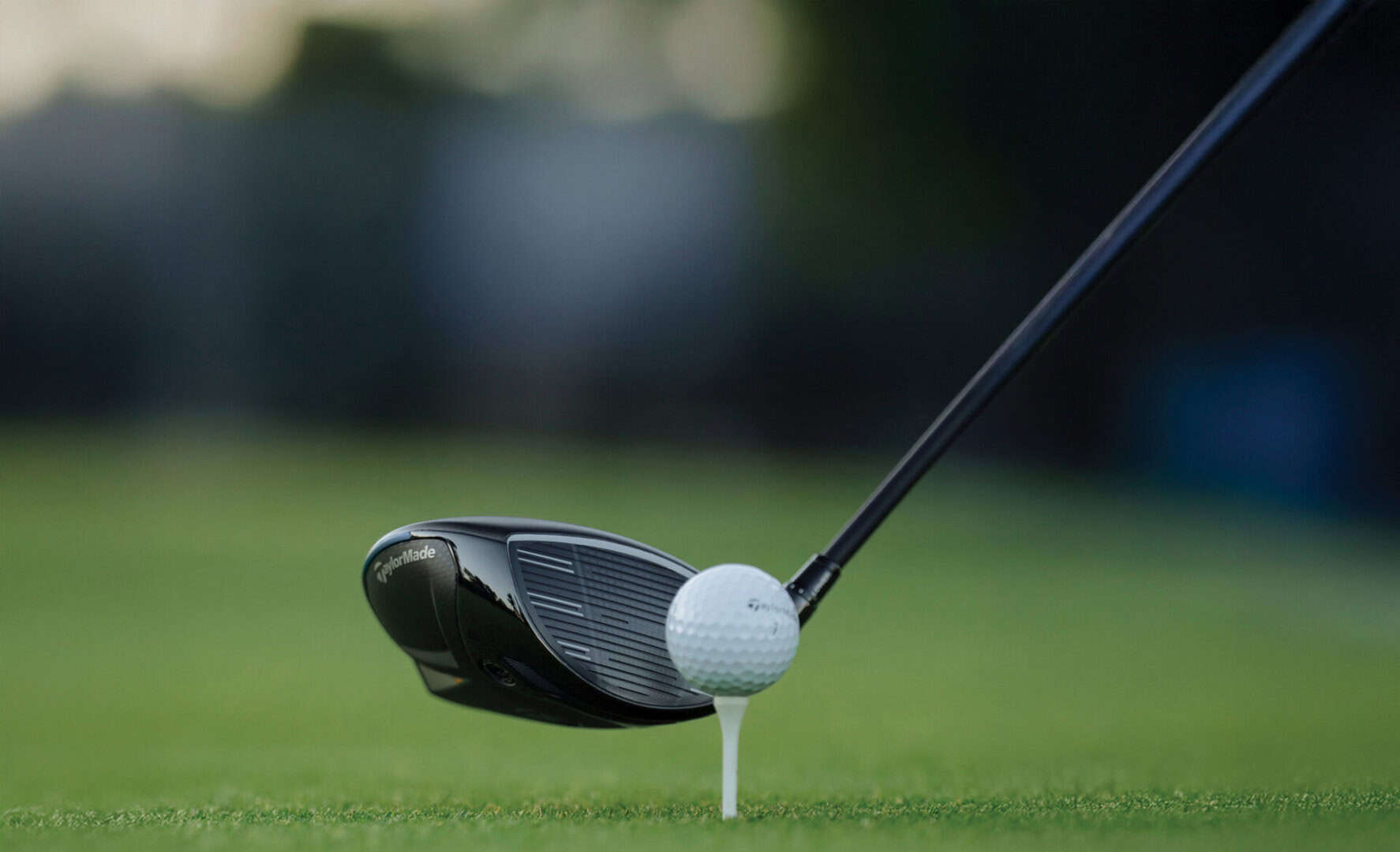
Enter Qi4D. And for once, TaylorMade hasn’t turned up shouting about “17 more yards” like a bloke in a pub after his third pint.
Instead, they’ve done something far more sensible. They’ve added adjustability that actually matters.
The headline act is the Trajectory Adjustment System—four movable weights in the standard Qi4D head. Not gimmicky, not decorative, but genuinely useful. This thing gives fitters more control than a DJ booth in Ibiza.
Want more stability? Done.
Need lower spin without turning it into a banana launcher? Easy.
Trying to fine-tune a launch window without wrecking dispersion? That’s the whole point.
This is the bit last year’s model was missing. It was fast, but it was fussy. Qi4D is fast and flexible.
Why Tour Players Actually Care About This Stuff
From the outside, you might think tour pros want one thing: distance. They don’t. They want predictability. Distance is useless if it comes with a double-cross and a provisional ball.
Qi4D’s weight system lets fitters move the centre of gravity in ways that actually change ball flight without breaking everything else. That’s crucial at the top end, where launch, spin and face angle are measured in decimals, not vibes.
It means one head can be tweaked to suit:
- Someone who launches it like a mortar
- Someone who hits moon-balls
- Someone who swings like a metronome and just wants the left miss to die quietly
That’s how you win back trust in a tour van. Not with slogans. With options.
The Clarkson Bit: It’s Basically a Swiss Army Knife With a Headcover
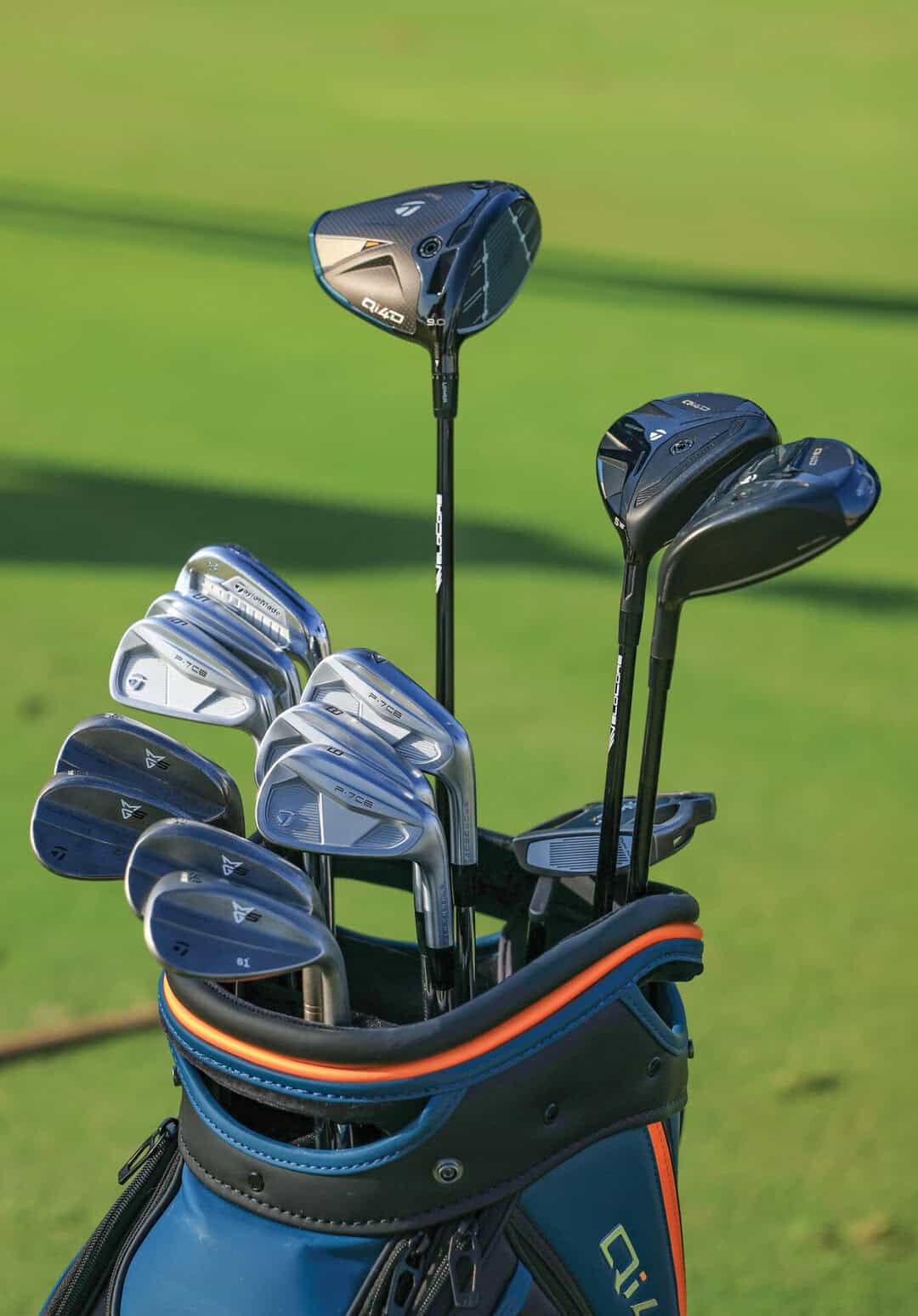
If last year’s driver was a very fast hammer, Qi4D is more like a Swiss Army knife. Still fast. Still shiny. But now it can do several jobs without smashing your thumb.
TaylorMade has clearly realised that modern golfers—especially good ones—don’t want to be told how to hit it. They want a platform they can tune.
And for amateurs, this is quietly brilliant.
Because while Rory and Scottie grab the headlines, Qi4D’s biggest win might be at your local fitting bay, where:
- You don’t swing the same every time
- You miss it in creative ways
- And you’d quite like your “bad” drive to stay on the planet
Qi4D gives fitters more ways to help real golfers without forcing them into a low-spin head that behaves like a feral cat.
A Subtle Change in TaylorMade’s Tone
What’s fascinating is how un-TaylorMade this all feels.
There’s still talk of speed, obviously. This is TaylorMade—we’re not suddenly discussing poetry. But the emphasis has shifted. Speed is now something you manage, not just unleash.
The carbon face is about maintaining spin consistency.
The shaping is about stability through the strike.
The lineup—Max, standard, LS—accepts that not everyone swings like a tour athlete with a personal physio.
It’s almost… mature.
Which is not a word usually associated with driver launches involving smoke machines and phrases like “game-changer.”
Will This Get McIlroy and Scheffler Back On Board?
Maybe. Maybe not.
And here’s the twist: it almost doesn’t matter.
Qi4D doesn’t need universal tour adoption to succeed. What it needs is credibility. And it has that.
It tells golfers that TaylorMade listened. That last year wasn’t brushed under the carpet. That this driver exists because the previous one didn’t quite nail it where it counted.
If Rory puts it in play? Great.
If Scottie switches full-time? Fantastic.
If they don’t—but fitters can clearly show tighter dispersion and better launch? That’s still a win.
The Bottom Line: This Is How You Say Sorry in Golf
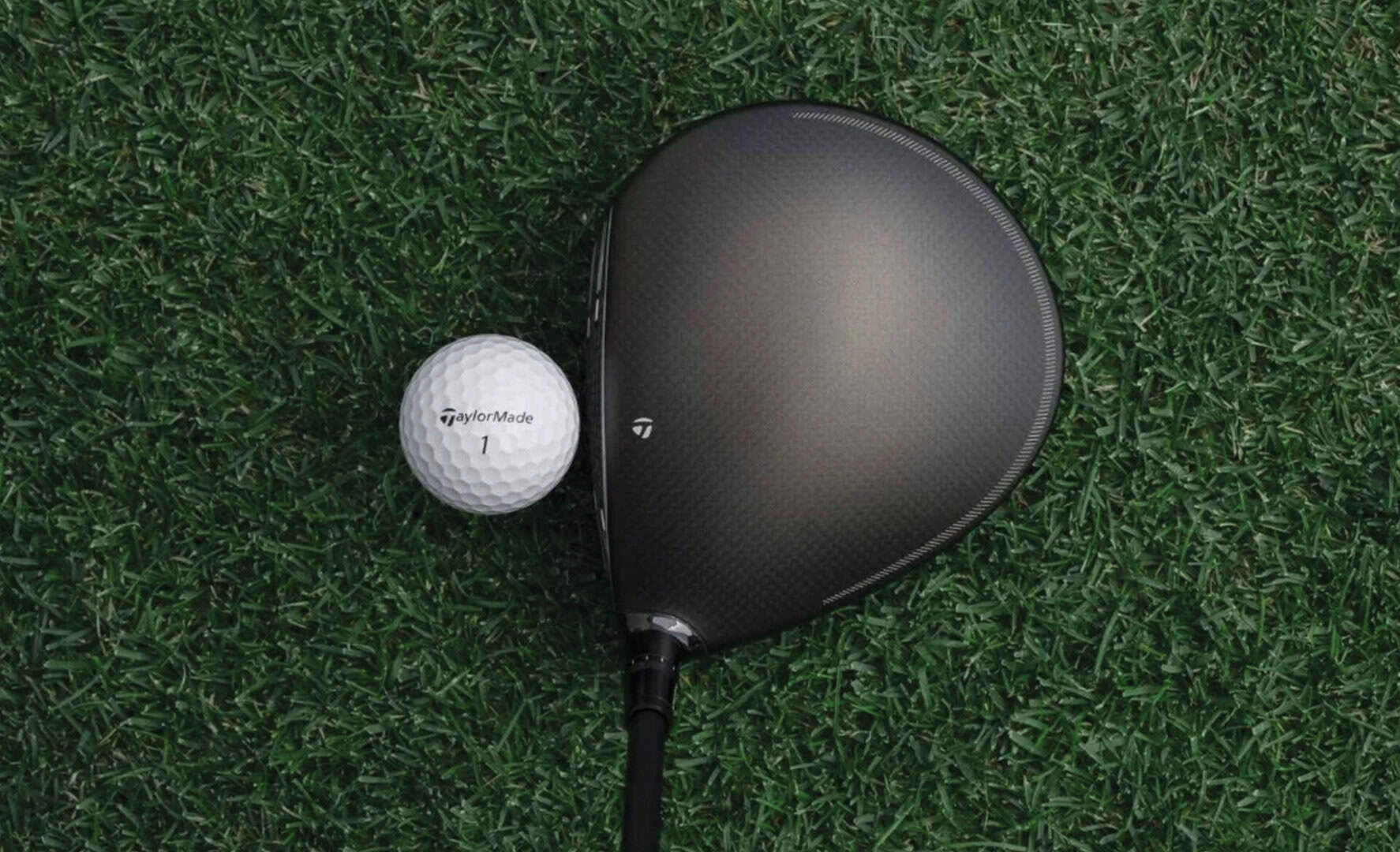
Qi4D is TaylorMade doing the grown-up thing. Not pretending last year didn’t happen. Not doubling down on hype. Just quietly building a better, more adaptable driver.
It’s not the loudest release they’ve ever done.
It’s not the flashiest.
But it might be one of the smartest.
And in a world where confidence sells clubs just as much as ball speed, Qi4D feels like TaylorMade getting back to what it does best: making drivers people actually trust.
Which, when you think about it, is rather the whole point.